
Precision Machine Parts: The Hidden Foundation of Modern Industrial Equipment
In today‘s manufacturing industry, precision machine parts play a critical role in ensuring the performance, reliability, and longevity of industrial equipment. From automated production lines and semiconductor systems to medical devices and energy equipment, high-precision components are essential for maintaining consistent operation and meeting increasingly demanding engineering standards.
What Are Precision Machine Parts?
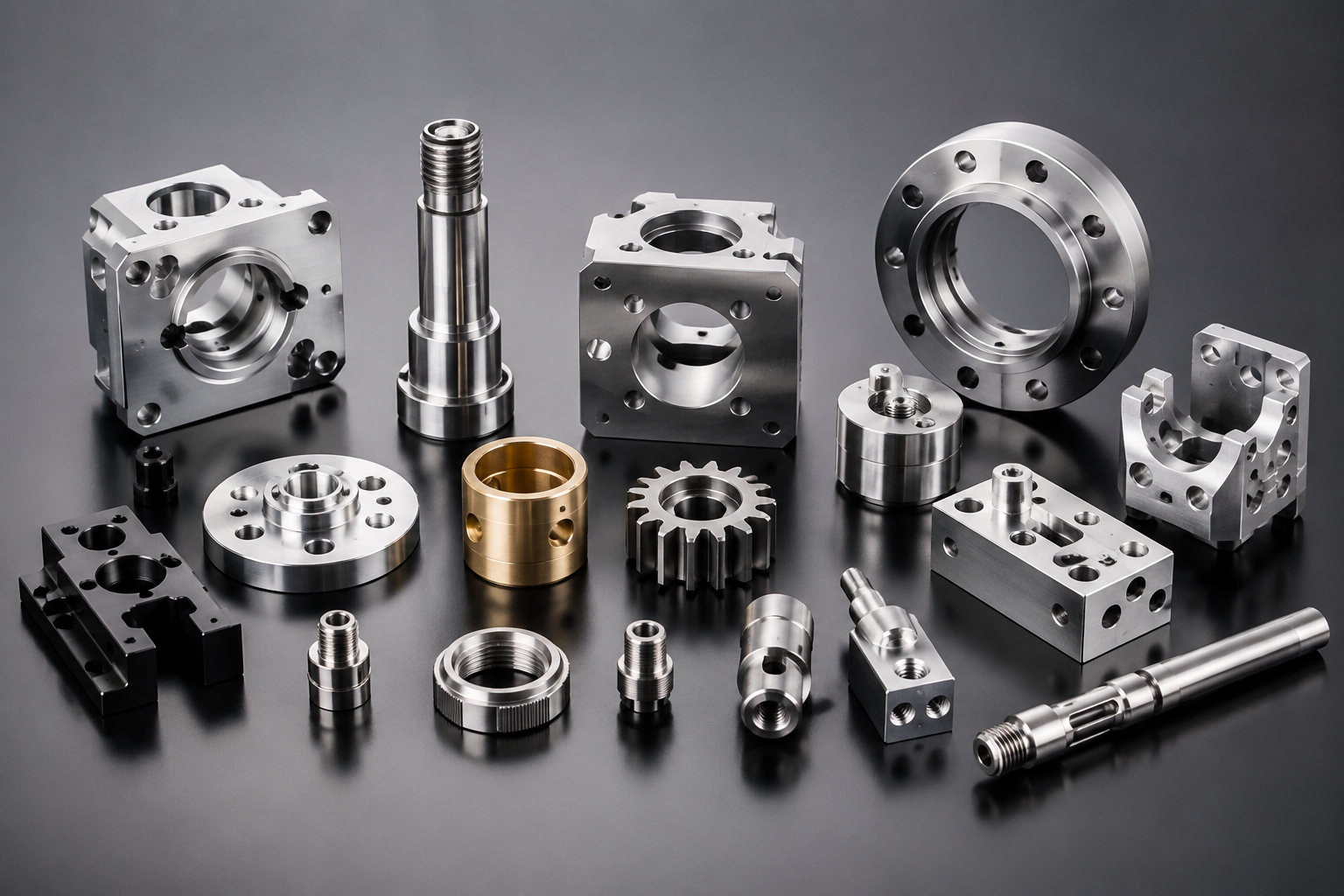
Precision machine parts are custom-manufactured mechanical components produced to extremely tight dimensional tolerances. These parts are typically made through processes such as CNC machining, turning, milling, grinding, EDM, and surface finishing.
Common examples include:
- Shafts
- Bushings
- Housings
- Flanges
- Mounting plates
- Gear components
- Valve bodies
- Fixtures and jigs
- Precision brackets
- Automation equipment parts
Depending on the application, dimensional tolerances can range from ±0.05 mm down to ±0.005 mm or even tighter.
Why Precision Matters
Even a minor dimensional deviation can affect the overall performance of an assembly. Precision machine parts ensure:
1. Reliable Equipment Performance
Accurate dimensions allow components to fit together correctly, reducing vibration, wear, and operational instability.
For example, in automation equipment, misalignment of a guide shaft or mounting plate can lead to positioning errors and decreased production efficiency.
2. Longer Service Life
Properly machined components distribute loads evenly and minimize unnecessary friction, helping extend the lifespan of machinery.
This is especially important in industries where equipment operates continuously, such as manufacturing, packaging, and energy production.
3. Consistent Product Quality
Industrial manufacturers rely on repeatable part quality to maintain consistent equipment performance across multiple production batches.
Precision machining ensures every component meets the same specifications, reducing assembly issues and field failures.
Common Materials Used in Precision Machining
Material selection depends on the operating environment, load requirements, corrosion resistance, and cost considerations.
Aluminum
Advantages:
- Lightweight
- Good machinability
- Excellent corrosion resistance
- Suitable for automation equipment and fixtures
Popular grades:
- 6061-T6
- 7075-T6
Stainless Steel
Advantages:
- High strength
- Corrosion resistant
- Suitable for medical, food processing, and outdoor applications
Popular grades:
- SUS303
- SUS304
- SUS316
Carbon Steel
Advantages:
- Cost-effective
- High mechanical strength
- Suitable for industrial machinery
Popular grades:
- S45C
- 1045
- 4140
Engineering Plastics
Advantages:
- Lightweight
- Electrical insulation
- Chemical resistance
Popular materials:
- POM (Delrin)
- PEEK
- PTFE
- Nylon
Industries That Depend on Precision Machine Parts
Industrial Automation
Automation systems require precise positioning and repeatable motion control. Components such as mounting brackets, linear motion parts, and sensor housings must be manufactured accurately to ensure system stability.
Semiconductor Equipment
Semiconductor manufacturing demands extremely high precision and cleanliness. Custom machined components are widely used in wafer handling systems, vacuum chambers, and inspection equipment.
Medical Equipment
Medical devices require strict dimensional accuracy and traceability. Precision machine parts are commonly found in diagnostic equipment, surgical instruments, and laboratory systems.
Energy and Power Systems
Power generation and energy equipment rely on durable, accurately machined components capable of operating under demanding conditions.
Industrial Machinery
Machine builders require custom components that integrate seamlessly into complex assemblies while maintaining long-term reliability.
Key Factors When Selecting a Precision Machining Supplier
Choosing the right manufacturing partner is just as important as selecting the right design.
Manufacturing Capability
A qualified supplier should offer:
- CNC Turning
- CNC Milling
- Multi-axis Machining
- Grinding
- Surface Treatment
- Assembly Services
Quality Control System
Look for suppliers that implement:
- Incoming material inspection
- In-process inspection
- Final dimensional verification
- Calibration management
- Traceability systems
Engineering Support
Experienced suppliers can provide:
- Design for Manufacturability (DFM)
- Material recommendations
- Cost reduction suggestions
- Process optimization
Industry Experience
Suppliers with experience in automation, semiconductor, medical, and industrial equipment sectors typically understand the requirements of high-precision applications.
The Future of Precision Machine Parts
As industries continue to adopt automation, robotics, and smart manufacturing technologies, demand for precision machine parts will continue to grow.
Future trends include:
- Higher dimensional accuracy requirements
- Increased use of multi-axis machining
- Greater demand for complex geometries
- Integration of quality data and digital traceability
- Faster prototyping and production cycles
Manufacturers that combine advanced machining technology with rigorous quality control will be best positioned to support next-generation industrial equipment.
Conclusion
Precision machine parts are the foundation of modern machinery and industrial systems. Their accuracy directly impacts equipment performance, reliability, and operational efficiency.
Whether used in automation equipment, semiconductor systems, medical devices, or industrial machinery, high-quality precision components help manufacturers achieve consistent results and reduce long-term operating costs.
For machine builders and industrial equipment manufacturers, selecting an experienced precision machining partner is an important step toward ensuring product quality and long-term success.
Leave a Reply